
Asking ChatGPT gets you an answer once.
Putting AI to work means a job runs every week without you starting it.
That's the difference between a clever tool and real time back in your week.

Key takeaways
- Chatting with AI saves minutes. Putting it to work saves hours.
- Working AI has three things: a trigger, instructions and a hand-off.
- ChatGPT is a great place to practise and to draft.
- The time savings come when the task runs on its own.
Why hasn't ChatGPT changed my week?
Because you still have to start it.
You open it. You type the question. You copy the answer. You paste it somewhere.
Then you do it all again tomorrow.
It's faster than doing it from scratch. But you're still the one doing it.
That's why so many owners say, "I tried AI. It was interesting." And then nothing changed.
What does "putting AI to work" actually mean?
It means the task runs without you starting it.
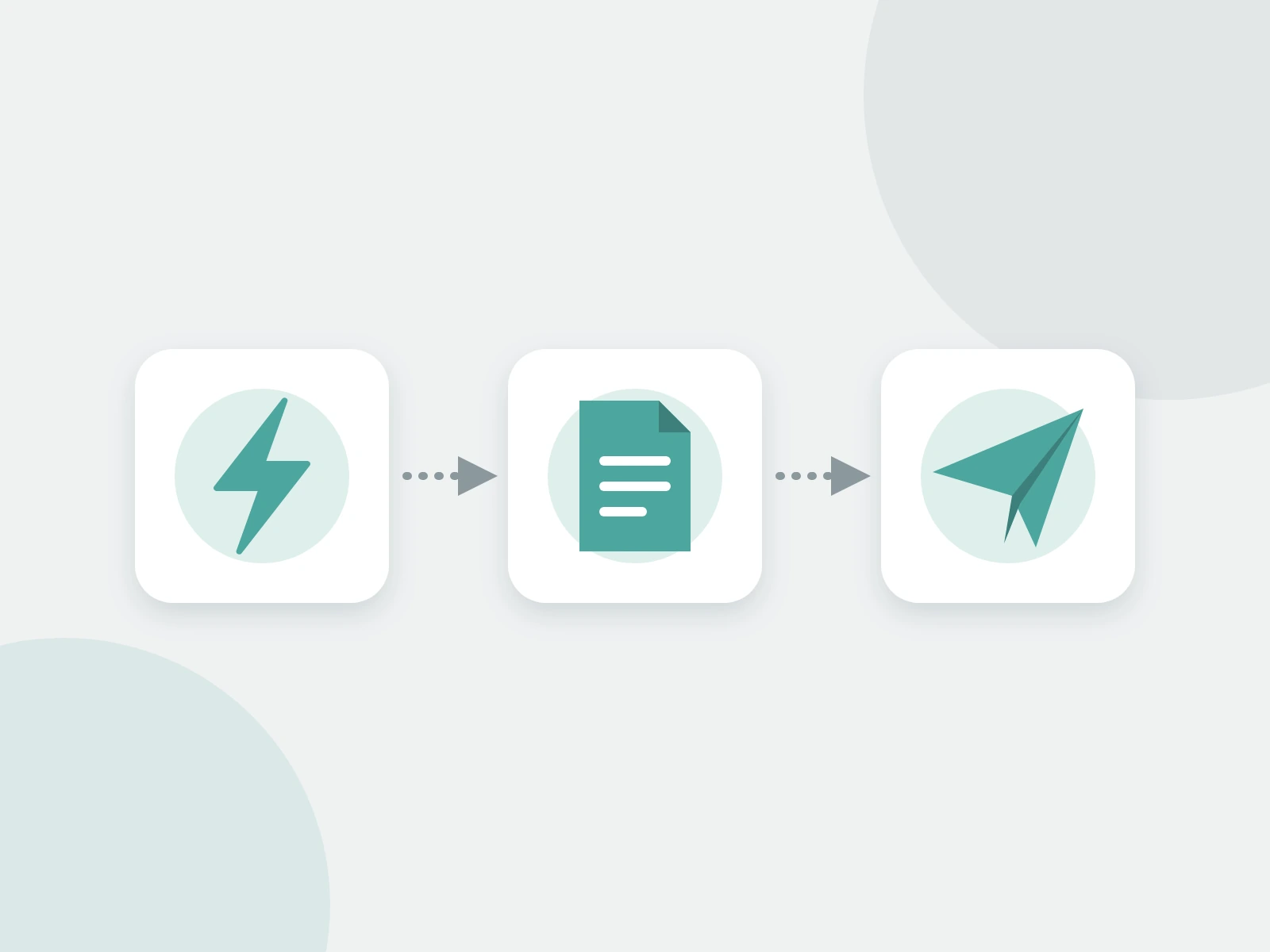
Every working AI set-up has three parts:
- A trigger. Something that starts it: a new lead, a missed call, a Monday morning, a finished job.
- Instructions. Exactly what to do, written once, in your words.
- A hand-off. Where the result goes: a text to the customer, a draft in your inbox, a booking in your calendar.
When all three are in place, the job gets done whether you remember it or not.
What does that look like in a real business?
Here's one task, done both ways.
Asking ChatGPT: a new lead fills in your form. Tonight, you open ChatGPT, ask it to write a reply, copy it, and email the lead.
By then, it's been six hours.
Putting AI to work: the lead fills in the form. Within a minute, they get a reply in your words, with a link to book a time.
You get a text saying it's done.
Same task. One of them still needs you.
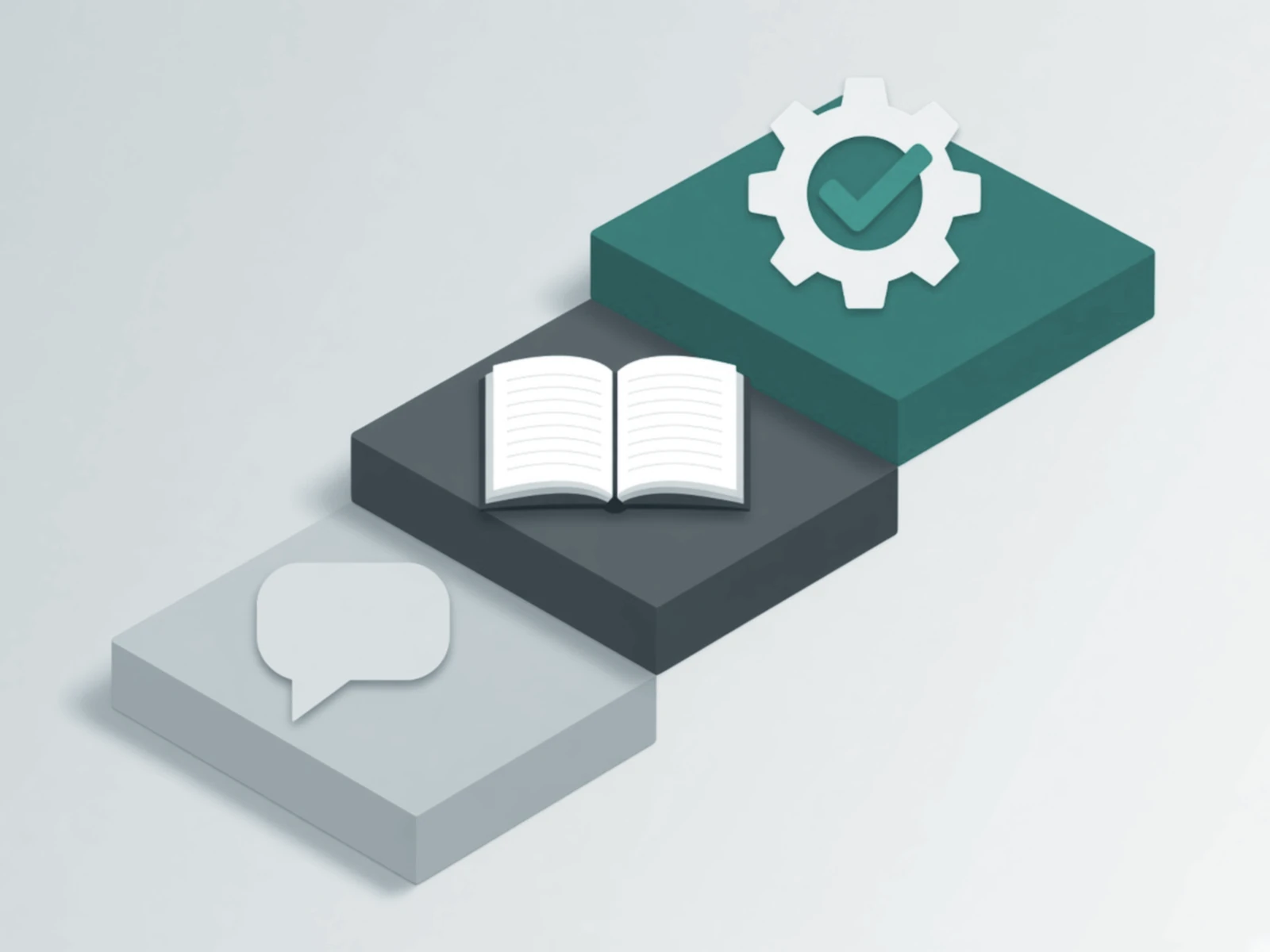
Ask it, teach it, hand it off
That's how I think about the three stages.
Ask it. You type a question, you get an answer. Good for learning and one-off writing.
Teach it. You give it your examples, your prices, your way of doing things. Now its drafts sound like you.
Hand it off. You connect it to a trigger and a hand-off. Now it runs without you.
Most owners stop at the first stage. The hours are in the third.
I run my own businesses this way, with a team of AI assistants that each have one job.
Want to see which of your tasks could run on its own?
Book your free 15-minute AI assessment
Move one task from "ask" to "hand off": 5 steps
1. Pick a task you already use ChatGPT for.
Replies, quotes, summaries. Something you do every week.
2. Write down when it starts.
What happens right before you do it? That's your trigger.
3. Save your instructions.
The prompt that works best, plus two or three of your real examples.
4. Decide where the result goes.
To the customer, to your inbox as a draft, or into your calendar.
5. Connect the pieces.
Many tools you already use can do this. If not, this is where some help pays off.
Frequently asked questions
Is ChatGPT enough for my business?
It's a great start for writing and research.
But the real time savings come when tasks run on their own.
What's an AI agent?
An AI set up to do one job, start to finish, when something triggers it.
Like answering a new lead or sending a weekly report.
Is it safe to let AI send things to customers?
Start with drafts you check.
Once it gets them right every time, let it send the routine ones.
Do I need special software?
Often not. Your phone, booking or CRM tools may already have it.
Some jobs need a simple connection or a custom set-up.
How do I make AI sound like me?
Give it your real examples: past emails, quotes or replies.
The more of your own words it sees, the more it sounds like you.
Stop asking. Start handing off.
ChatGPT is a good teacher.
But a task you still have to start is still your task.
The hours come back when the job runs without you.
Let's find the job to hand off first
On a free 15-minute call, I'll find the task costing you the most time.
Then I'll come back on a second short call with one fix for it.
Both calls are free.
Book your free 15-minute AI assessment
Keep learning
- Where should a small business start with AI?
- Do I need to be technical to use AI in my business?
- How do I stop leads going cold?
- What we build: AI agents
About Jim Swan
Jim Swan has run Swan Media Solutions in the Okanagan since 2014.
He helps business owners put AI to work, builds his own software (TreWise, SipLocal and TimeSpend), and runs his own businesses with a team of AI assistants.